Salesforce Architecture, Data & AI· Ecommerce

Enterprise order management transformation

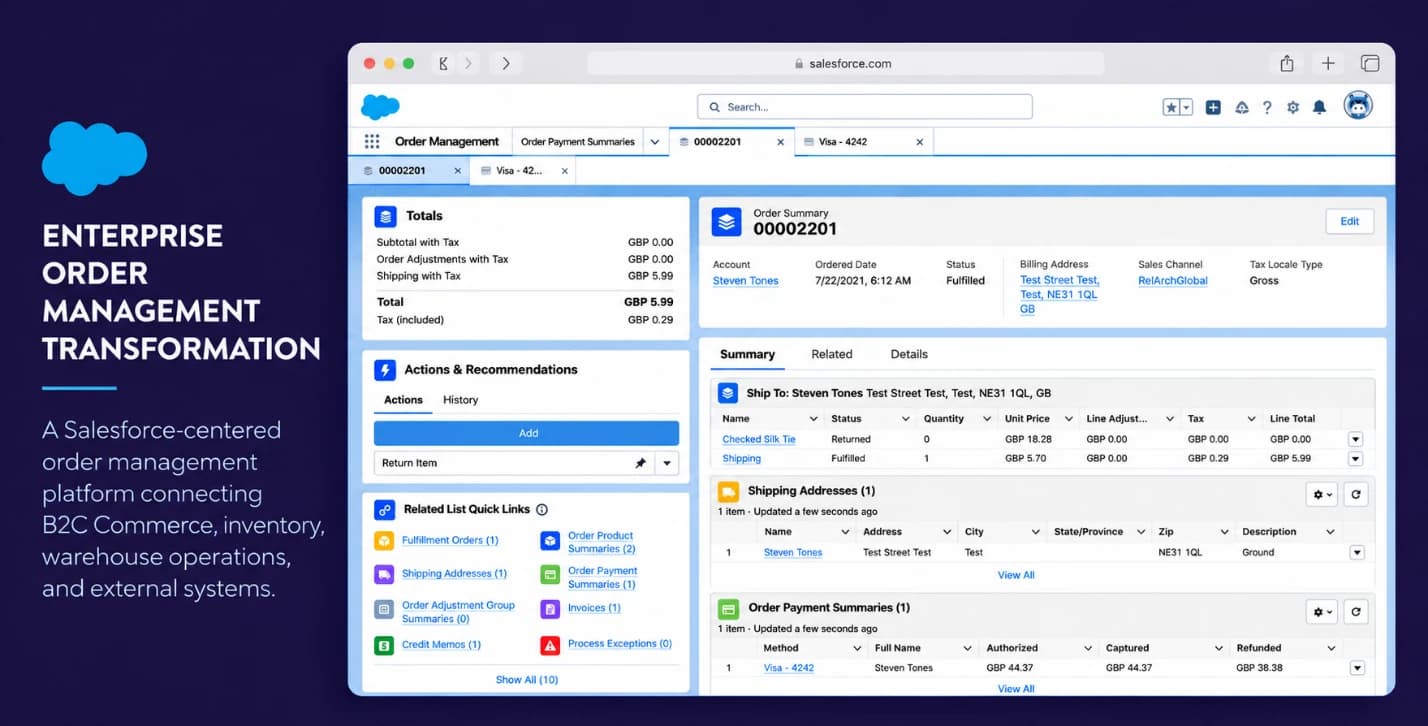
A Salesforce-centred order management platform connecting B2C Commerce, inventory, warehouse operations and external systems. It gives the business one automated order lifecycle, from checkout through fulfilment.

  • Sector Retail and ecommerce
  • Client Enterprise commerce organisation
  • Role Salesforce developer
One automated order lifecycle, from checkout to fulfilment
End-to-end
Batch Apex for high-volume order and inventory work
Batch
Sharing controls who can see and act on orders
Role-based
An order summary in Salesforce Order Management, with totals, shipping details and payment summaries
The starting point

The challenge

Every order crossed commerce, inventory, warehouse and external systems. Each hand-off was a coordination point where orders could stall or stock counts could drift. The business needed reliable order lifecycle management, inventory synchronisation across systems, clean commerce-to-OMS integration, automation flexible enough to evolve with business rules, secure and role-appropriate access to orders, and processing that scales with volume.

The solution

What we built

  • Built the environment on Salesforce Order Management and Omnichannel Inventory, extending the standard model with custom objects and data models where the business needed more.

  • Lifecycle automation: Flow orchestrates each order's progress, with Apex triggers and classes where logic needed programmatic control.

  • Inventory: Omnichannel Inventory provides availability for order and fulfilment decisions.

  • Warehouse processing: fulfilment work flows to warehouse operations.

  • Payments: custom payment methods for the business's payment options.

  • High volume: Batch Apex for large order and inventory operations.

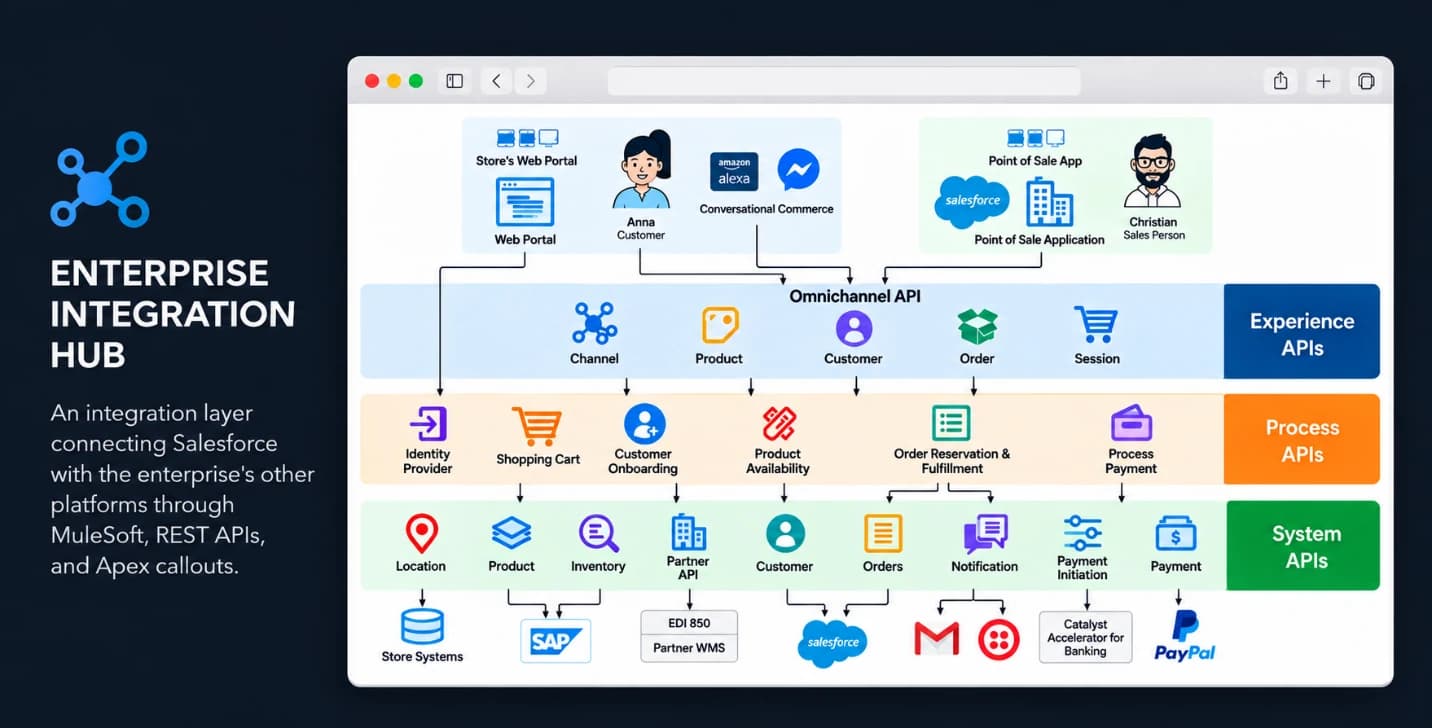
  • Integration: REST APIs to external platforms, and Salesforce Connect for external data access.

Architecture

How the system works

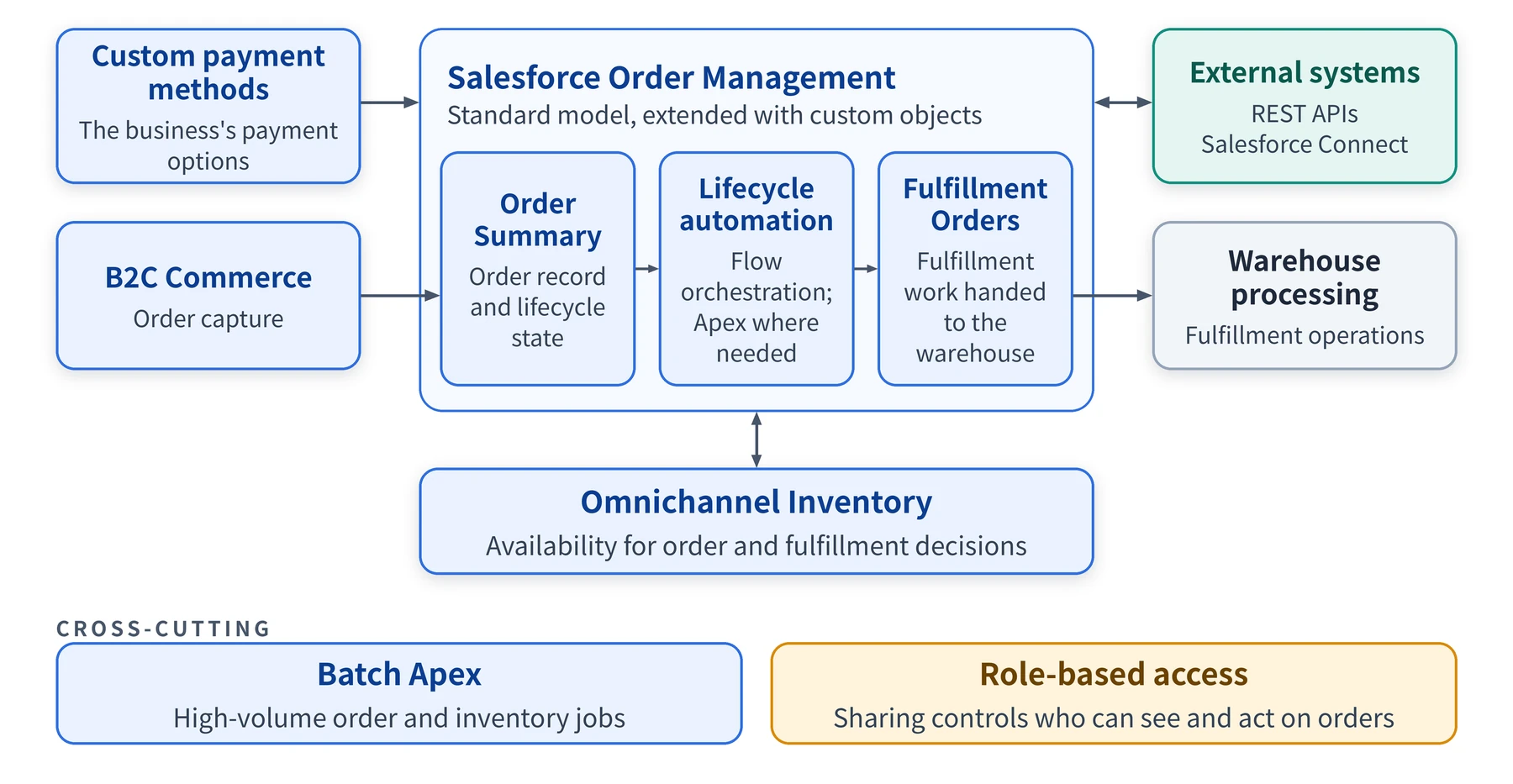
Architecture: B2C Commerce order capture and custom payment methods feed Salesforce Order Management, where the order summary, lifecycle automation with Flow and Apex, and fulfilment orders hand work to warehouse processing; Omnichannel Inventory supplies availability, REST APIs and Salesforce Connect link external systems, and Batch Apex and role-based access apply throughout
Order lifecycle from B2C Commerce capture to warehouse fulfilment, with inventory, payments, batch processing and role-based access.
Engineering

How it was engineered

  • Declarative first, code where it earns its place. Flow covers lifecycle logic admins can adjust without a release. Apex handles what needs programmatic control.

  • Batch for volume. High-volume order and inventory work runs as batch jobs, so peak load doesn't compete with day-to-day activity or hit platform limits.

  • Two integration patterns, used deliberately. REST where data has to move between systems. Salesforce Connect where it only needs to be seen in place.

  • Access built around roles. Sharing and access configuration controls who can see and act on orders.

Scope

What was delivered

01

End-to-end order lifecycle in Salesforce

02

Inventory synchronisation

03

Commerce-to-OMS connectivity

04

Warehouse fulfilment processing

05

Custom payment handling

Technology

Stack

Salesforce OMSOmnichannel InventoryB2C CommerceApexBatch ApexFlowREST APIsSalesforce ConnectSalesforce Security

Need something similar?

We can scope and build a system with comparable capabilities, shaped around your own workflows, data and integrations.